

Bird · Resident
Shoebill
How to identify the shoebill
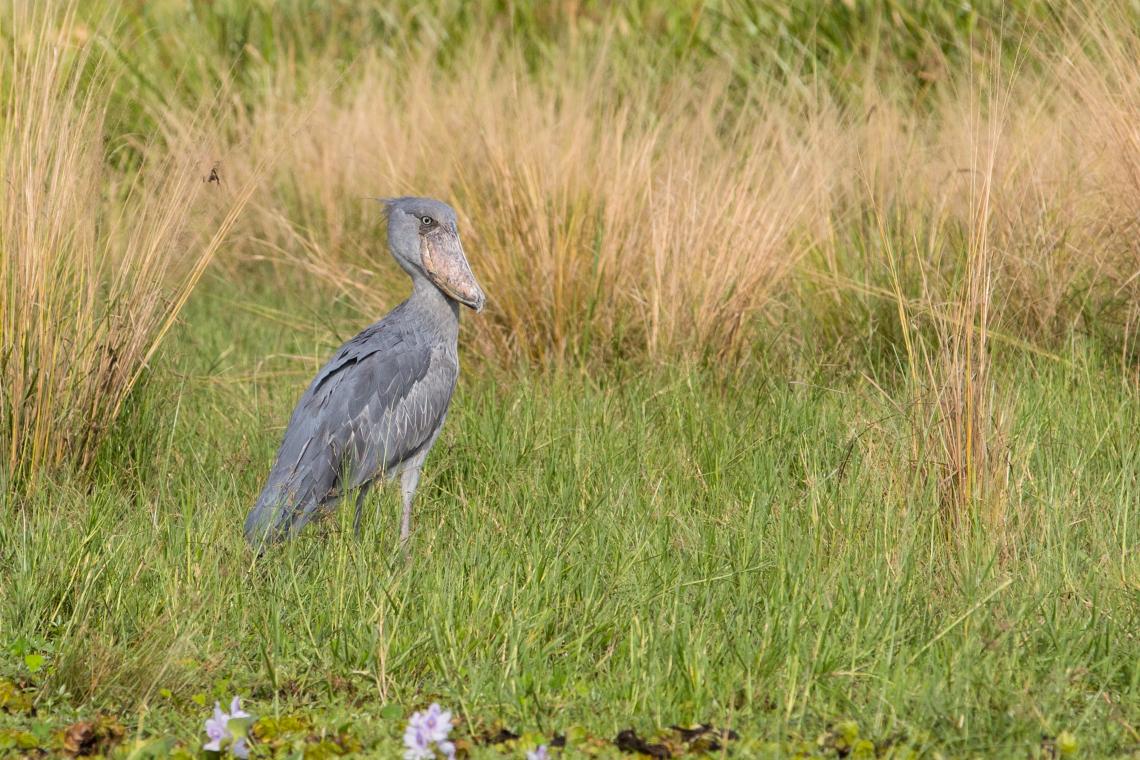
Unmistakable: slate-grey all over, standing as tall as a child, with a broad, clog-shaped bill that ends in a sharp hook and pale, staring eyes. It often stands perfectly still for minutes at a time.
Where to see the shoebill in Murchison Falls National Park
In the delta swamps where the Victoria Nile flows into Lake Albert, reached on a boat cruise downstream. A morning delta cruise with a birding guide gives the best chance.
Habitat
Freshwater swamps with papyrus and reeds, floating vegetation and slow, shallow, poorly oxygenated water where fish come to the surface.
What the shoebill eats
Mostly fish, above all lungfish, with catfish and tilapia; also frogs, water snakes and young monitor lizards.
Behaviour
A solitary, patient hunter. It waits motionless, then lunges forward with its whole body to seize prey. Pairs greet each other at the nest by clattering their bills, a sound like a burst of machine-gun fire.
Best time to see the shoebill
All year; easiest in the drier months, roughly December to March. Resident, here all year.
Last reviewed 7 October 2026. Further reading: en.wikipedia.org.
Questions about the shoebill
Where can I see a shoebill in Murchison Falls National Park?
In the papyrus swamps of the Nile delta, where the Victoria Nile enters Lake Albert. Shoebills are looked for from a boat on a delta cruise, ideally in the early morning.
What is the best time of year to see a shoebill?
Shoebills live in the delta all year. Many guides find them easier in the drier months, roughly December to March, when water levels are lower and the birds are more in the open.
Is the shoebill a stork?
It is often called the shoebill stork, but it is not a true stork. It is the only member of its own family, Balaenicipitidae, and its closest relatives are pelicans and the hamerkop.
The shoebill in our journal
Murchison Falls National Park: A Bird Watcher’s Paradise
Nestled in the heart of Uganda, Murchison Falls National Park is more than just a haven for iconic wildlife; it’s a bird watcher’s dream come true. With over 450 bird species soaring through its vast skies…

Why Uganda Should Be Your Next Bucket List Destination—Discover the Pearl of Africa
Planning your annual trip can feel overwhelming -193 countries, countless cultures, and endless possibilities. Where do you even begin? Let us introduce you to Uganda, famously called the Pearl of Africa by…

10 Must-Know Tips Before You Travel to Murchison Falls National Park
Planning a visit to Murchison Falls National Park? You're in for a memorable adventure! Located in the northern end of the Albertine Rift Valley, it is Uganda's largest and oldest conversation area, offering…
More birds

African Fish Eagle
Icthyophaga vocifer
The African fish eagle is a large eagle with a white head, chestnut body and black wings, seen perched in riverside trees all along the Nile in Murch…
Goliath Heron
Ardea goliath
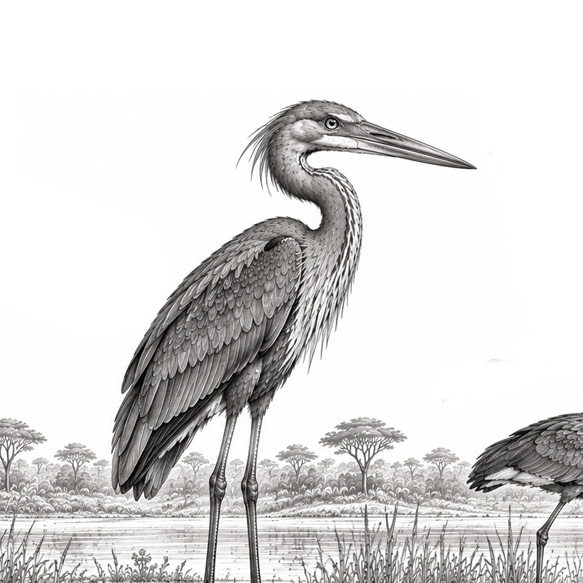
The Goliath heron is the largest heron in the world, standing up to a metre and a half tall. In Murchison Falls it hunts alone in the shallows of the…

Grey Crowned Crane
Balearica regulorum
The grey crowned crane is Uganda's national bird and appears on the national flag. It is a tall grey crane with a crown of stiff golden feathers, fou…