
Bird · Resident
African Jacana
How to identify the African jacana
Chestnut body, white face and foreneck, black crown and hind neck, and a pale blue bill and forehead shield. The toes and claws are extremely long.
Where to see the African jacana in Murchison Falls National Park
On floating vegetation along the river's edge and in the delta, on boat cruises.
Habitat
Still or slow water covered with water lilies and other floating vegetation.
What the African jacana eats
Insects and other small animals picked from floating plants and the water surface.
Behaviour
The female mates with several males; each male incubates the eggs and raises the chicks alone, carrying them under his wings when danger threatens.
Best time to see the African jacana
All year. Resident, here all year.
Last reviewed 5 October 2026. Further reading: en.wikipedia.org.
Questions about the African jacana
How does a jacana walk on water lilies?
Its toes and claws are very long and spread its weight over a wide area, so floating leaves can carry it.
More birds

Shoebill
Balaeniceps rex
The shoebill is a tall, blue-grey waterbird with a huge shoe-shaped bill, and the bird most visitors to Murchison Falls hope to see. It lives in the…

African Fish Eagle
Icthyophaga vocifer
The African fish eagle is a large eagle with a white head, chestnut body and black wings, seen perched in riverside trees all along the Nile in Murch…
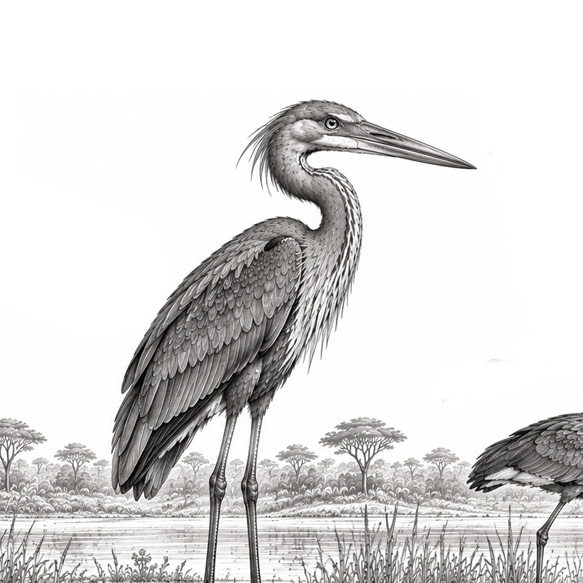
Goliath Heron
Ardea goliath
The Goliath heron is the largest heron in the world, standing up to a metre and a half tall. In Murchison Falls it hunts alone in the shallows of the…